Hosted identity pages, not only auth APIs

Guardhouse vs Supabase Auth

Guardhouse packages hosted login, account management, authorization, email delivery, and machine access as one product. Supabase Auth is tied closely to Postgres and Row Level Security, with application-owned UI and policy design. The deciding question is how much of the customer identity journey your team wants to build.

Why teams choose Guardhouse over Supabase Auth

Guardhouse advantage

Guardhouse is best for

Teams that want a complete white-label identity journey without assembling auth screens, permission tables, customer administration, and service authentication themselves.

  • Hosted registration, invitations, login, recovery, MFA, passkeys, profile, security, and session management.
  • Low-code roles and permissions, with organizations and SSO available from Business.
  • Predictable identity plans covering human users, services, APIs, agents, and MCP servers.

Where Supabase Auth fits

Supabase Auth is best for

Teams already building on Supabase that want identity tied directly to Postgres and are comfortable owning customer UI and authorization policy code.

  • Authentication integrated with the Supabase database, APIs, Storage, and Realtime.
  • Flexible authorization through application-defined Postgres policies and custom token claims.
  • Official Next.js UI blocks for common password and social flows, plus broad providers and SDKs.

Use hosted pages without giving up your product design

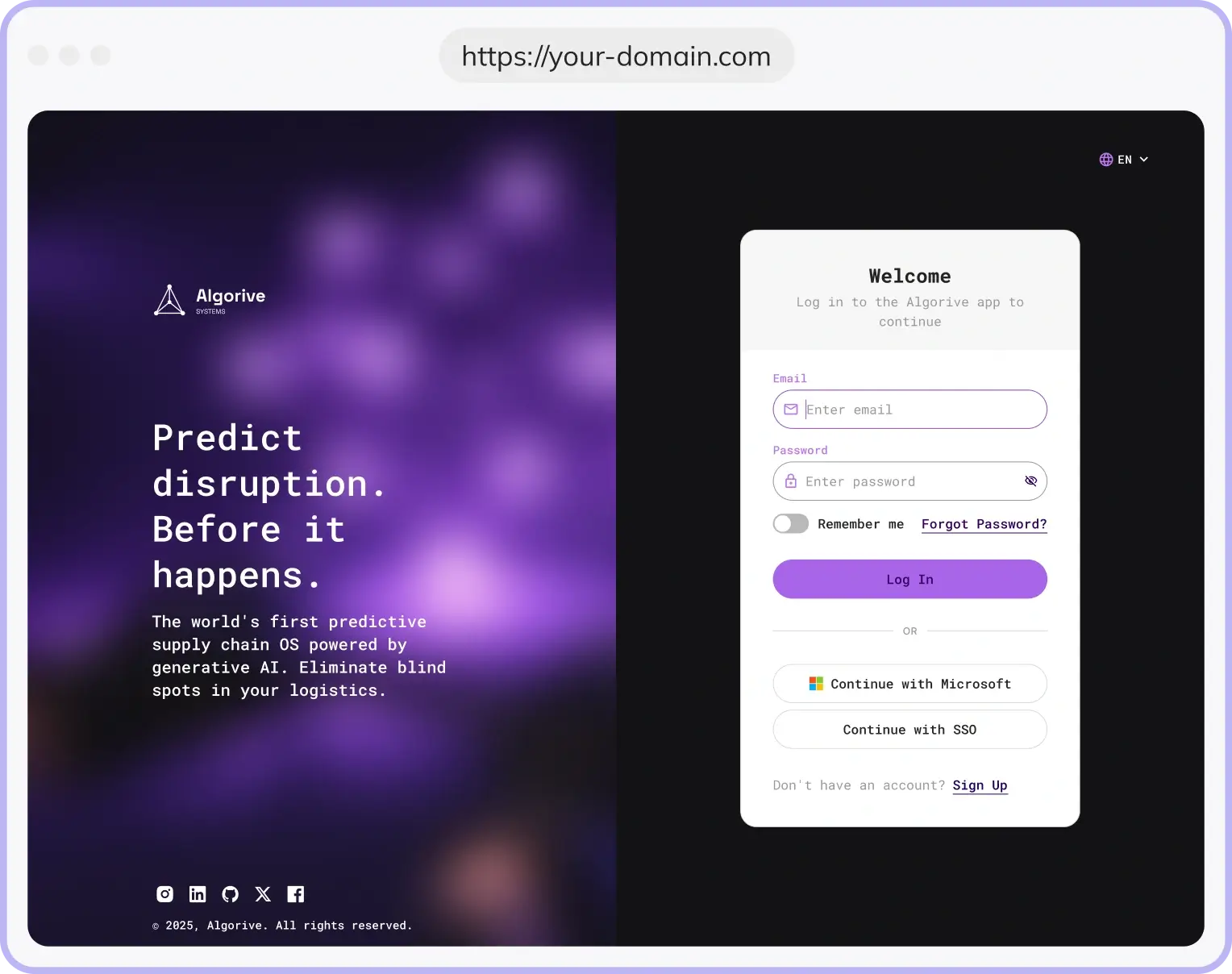
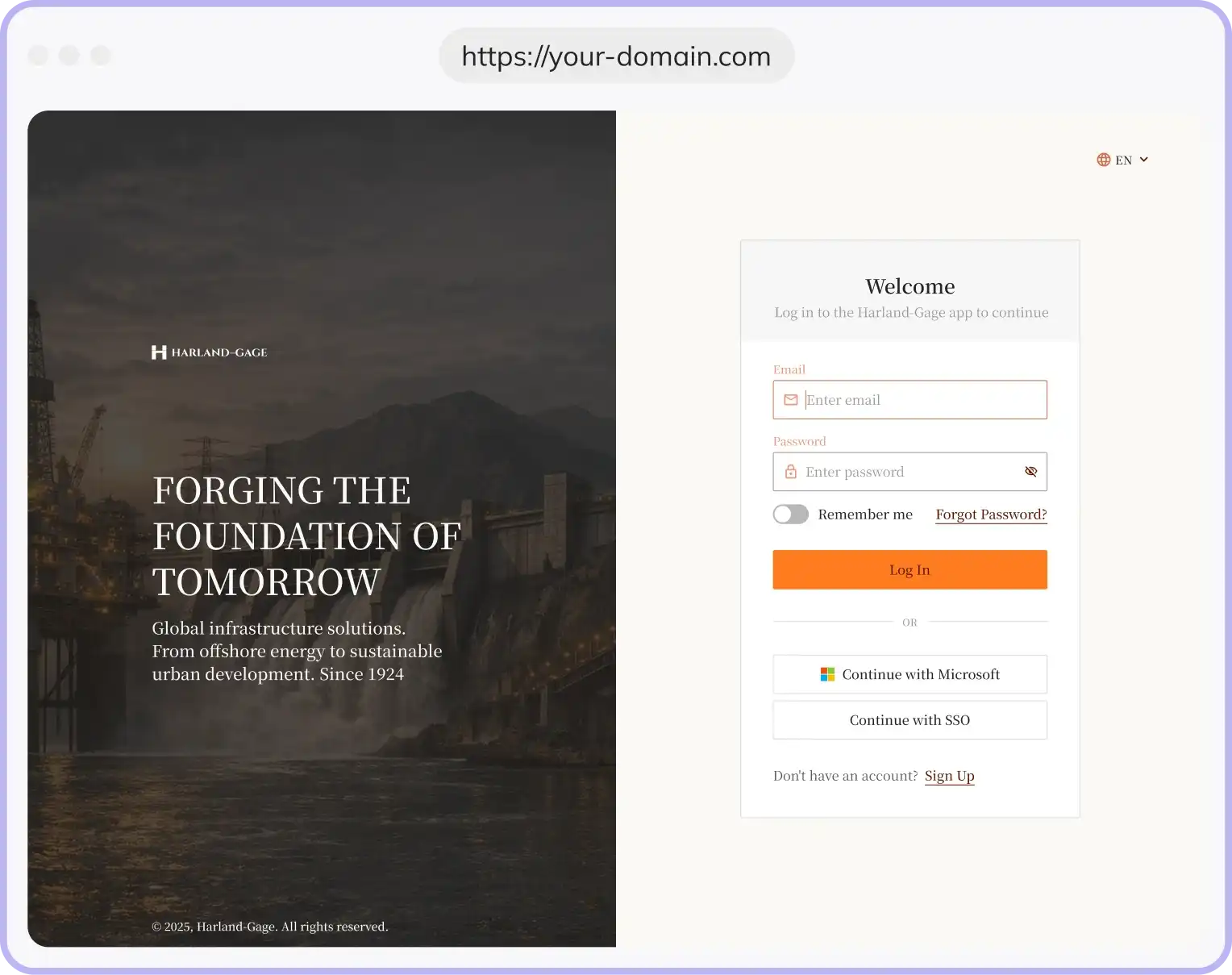
Guardhouse hosts the identity experience on your domain and gives every plan visual themes plus advanced HTML and CSS control. Your application keeps its own visual language without maintaining separate authentication screens.

A dark, purple branded Guardhouse sign-in experience on a custom domain
Custom typography, layout, imagery, providers, and sign-in options.
A light editorial Guardhouse sign-in experience on a custom domain
A second design using the same Guardhouse-hosted pages.

See what Guardhouse gives your team

Compare the customer experience, access model, implementation work, pricing, and deployment choices. Use the filters to focus on the decision your team is making.

Filter by category

Every row in this comparison is a difference.

Authentication

Authentication methods

Guardhouse

Hosted password, passwordless, social, and SSO flows

Email/password, email magic links, Google, Microsoft, Apple, and Facebook are built in. Business and Enterprise plans add SSO.

Supabase Auth

Broad password, passwordless, phone, social, and SSO support

Supports email or phone credentials, magic links and OTPs, anonymous users, many social and custom OAuth/OIDC providers, and usage-priced SAML on paid plans. Applications integrate the flows.

MFA and passkeys

Guardhouse

Hosted TOTP, recovery, trusted-device, and passkey flows

Enrollment, challenge, recovery codes, trusted devices, administrator MFA reset, and user-managed WebAuthn credentials are part of the hosted journey.

Supabase Auth

Plan, add-on, or setup dependent

MFA APIs and experimental passkeys

TOTP is included and phone MFA is a paid add-on. The application must build enrollment, challenge, factor management, and enforcement. Passkey support is experimental and requires explicit client opt-in.

Sessions and revocation

Guardhouse

Hosted session controls and API revocation choices

Users can inspect and revoke browser and OAuth sessions from the hosted portal. APIs can reject revoked tokens on their next introspection check; locally validated JWTs remain valid until expiry.

Supabase Auth

Available

JWT and rotating refresh-token sessions

Pro adds session timeouts and single-session controls. Sign-out removes refresh state, but an issued access JWT remains valid until its expiry unless the API checks session state.

Authorization

OAuth/OIDC and API protection

Guardhouse

Ready OAuth/OIDC flows for users, APIs, and services

Includes hosted authorization, Authorization Code with PKCE, refresh tokens, Client Credentials, JWT/JWKS validation, introspection, revocation, APIs, audiences, and scopes.

Supabase Auth

Plan, add-on, or setup dependent

Beta OAuth 2.1/OIDC server with RLS integration

Supports Authorization Code with PKCE and refresh tokens, discovery, UserInfo, and JWKS. Client Credentials is not supported; the developer must build login handoff and consent UI.

Roles and permissions

Guardhouse

Low-code roles, permissions, and organizations

Manage roles, direct and inherited permissions, OAuth scopes, and token claims in the identity console. Business adds organizations and multi-tenancy.

Supabase Auth

Plan, add-on, or setup dependent

Build the model with Postgres RLS and custom claims

Supabase documents SQL role and permission tables, a Custom Access Token Hook, and RLS policies. It is flexible, but teams design, code, test, and administer the tenant and permission model.

Branding

User self-service

Guardhouse

Complete hosted profile and security portal

Users manage profile data, credentials, linked identities, passkeys, sessions, account deletion, and a basic profile export in a branded hosted experience.

Supabase Auth

Plan, add-on, or setup dependent

APIs, not a hosted account portal

APIs cover profile updates, identity linking, MFA, passkeys, and OAuth grants. The application builds and maintains the profile, security, session, consent, and account-deletion experience.

White-label branding

Guardhouse

White-label hosted journey on every plan

Theme controls, assets, custom text and links, seven languages, and advanced per-page HTML/CSS are available on all plans across login and profile surfaces.

Supabase Auth

Available

Customizable code blocks for basic Next.js auth screens

Supabase UI offers copied-into-your-app password and social-auth blocks for Next.js. Teams own the code and still build the wider account, MFA, passkey, consent, and administration journey. Email branding removal starts on Pro.

Custom domains

Guardhouse

Included on every plan

Customers configure a custom identity domain through a simple Customer Portal wizard on Startup, Business, and Enterprise.

Supabase Auth

Plan, add-on, or setup dependent

$10 monthly project add-on

Available on paid plans at $10 per domain per month per project. A project can use one CNAME-based custom domain; DNS and activation changes remain part of setup.

Transactional email

Guardhouse

Email templates and delivery included

Seventeen editable email templates, preview, testing, and SMTP, Postmark, SendGrid, or Amazon SES delivery are managed alongside authentication.

Supabase Auth

Plan, add-on, or setup dependent

Custom templates with customer-supplied production delivery

Custom SMTP and a Send Email Hook are supported. The default sender is testing-only, limited to authorized addresses and currently two messages per hour.

Pricing

Pricing model

Guardhouse

Predictable identity plans with published allowances

Startup is $50/€45 monthly with 100,000 MAU, 10,000 M2M tokens, and 1,000,000 introspections. Business is $250/€225 with 500,000 MAU, 100,000 M2M tokens, and 5,000,000 introspections. Annual billing lowers the monthly rate.

Supabase Auth

Available

Project subscription plus usage and add-ons

Free includes 50,000 MAU. Pro and Team include 100,000, then charge $0.00325 per MAU. Compute, egress, SSO, custom domains, and phone MFA can add cost.

Developer experience

Product focus and ideal customer

Guardhouse

Complete customer identity platform

Guardhouse delivers hosted customer pages, administration, authorization, email templates and delivery, API protection, and machine access in one product.

Supabase Auth

Auth service inside a backend platform

Supabase Auth can stand alone, but its main advantage is integration with a project's Postgres database, generated APIs, Storage, Realtime, and Functions. The application still owns the end-user journey.

User administration

Guardhouse

Purpose-built customer administration

The console and management API cover search, create, invite, update, block, reset, access assignment, anonymization, and deletion without building an admin application.

Supabase Auth

Available

Project dashboard plus server-side Admin APIs

Project operators can view, invite, delete, and export users in the dashboard; Admin APIs cover programmatic management. A delegated customer-admin experience requires application UI and a trusted backend.

Webhooks

Guardhouse

Available

User-created and user-updated webhooks

Includes user lifecycle events, signed delivery, endpoint controls, secret rotation, retry settings, and delivery history.

Supabase Auth

Plan, add-on, or setup dependent

Auth-flow hooks at selected execution points

HTTP or Postgres hooks can run before user creation, token issuance, email/SMS sending, and selected verification attempts; some hooks require Team or Enterprise.

SDKs and frameworks

Guardhouse

Available

.NET and JavaScript SDKs, with selected beta SDKs

Includes .NET/ASP.NET Core and React support. Node.js, React Native, and Python SDKs are beta; Python includes FastAPI and Flask helpers.

Supabase Auth

Broad official and community client ecosystem

Official libraries cover JavaScript/TypeScript, Dart/Flutter, Swift, and Python; other languages are community-maintained. Supabase UI adds Next.js auth blocks, while the SSR package remains beta.

Migration assistance

Guardhouse

Migration assistance and bulk import across plans

Guardhouse can support discovery, field and permission mapping, bulk user import, validation, and cutover. Scope and responsibilities are agreed for the source system and rollout.

Supabase Auth

Available

Documentation and plan-based support

Supabase publishes migration guides and lets project owners export users from Postgres. The published Free, Pro, and Team plans do not list hands-on Auth migration.

Support and ecosystem

Guardhouse

Available

Direct product support with migration help

Startup includes standard email support and Business adds priority support. Enterprise support, account management, and any response commitments are tailored to the customer agreement. Migration assistance is available with agreed scope.

Supabase Auth

Large ecosystem with plan-based managed support

Free is community-supported, Pro adds email support, Team adds priority support and SLAs, and Enterprise lists dedicated and 24/7 support. Self-hosting is community-supported.

M2M and AI

M2M authentication

Guardhouse

First-class OAuth for services and APIs

Client Credentials issues service tokens for configured API resources, audiences, and scopes, with introspection where current revocation status matters.

Supabase Auth

Limited

Backend secret keys, not an OAuth Client Credentials grant

Secret project keys support servers and jobs but bypass RLS. Supabase OAuth 2.1 explicitly does not support the client_credentials grant.

AI agents and MCP servers

Guardhouse

Dedicated agent and MCP resource types

Guardhouse protects agent and MCP resources with Client Credentials, scopes, JWT validation, and optional introspection.

Supabase Auth

Plan, add-on, or setup dependent

Beta user-delegated OAuth for MCP

Supports discovery, dynamic client registration, user consent, refresh tokens, and RLS. The developer supplies the MCP server and authorization interface.

Deployment

Cloud regions

Guardhouse

Available

Managed cloud in the USA and EU

Choose a primary Guardhouse Cloud region in the USA or EU. Enterprise can be customer-operated or operated by LegioSoft, with a hosting model tailored to customer requirements.

Supabase Auth

One primary region from a broad AWS catalog

Each project uses one primary region. Supabase lists three general choices and 17 specific AWS regions across the Americas, Europe, and APAC.

Self-hosting and deployment ownership

Guardhouse

Enterprise deployment choice

Enterprise can be customer-operated as a Docker deployment or operated by LegioSoft. The hosting model and responsibilities are tailored to customer requirements; SSO, directory sync, SCIM, and BYOK are also available.

Supabase Auth

Docker self-hosting for the wider Supabase stack

The operator owns provisioning, hardening, upgrades, Postgres maintenance, high availability, backups, monitoring, and uptime. Self-host support is community-based.

What changes when you choose Guardhouse

Pricing and scaling

Guardhouse keeps the identity bill legible. Startup includes 100,000 MAU, 10,000 M2M tokens, and 1,000,000 introspections; Business includes 500,000 MAU, 100,000 M2M tokens, and 5,000,000 introspections. Custom domains and white-label pages do not require separate add-ons; migration assistance is available with scope agreed for the source system.

Supabase Auth is billed inside a broader project subscription. Pro and Team include 100,000 MAU and then charge per additional MAU, while compute, egress, SAML users, custom domains, and phone MFA can create separate line items. Its OAuth 2.1 Server is free during beta, with post-beta pricing not yet published.

  • Compare identity work and add-ons, not the base subscription alone.
  • Guardhouse publishes separate allowances for people, service tokens, and introspection.

Branding and customer experience

Guardhouse owns the customer-facing identity journey: registration, invitations, sign-in, recovery, MFA, passkeys, profile and security settings, session controls, and email templates and delivery. Every plan includes a custom-domain wizard and advanced HTML/CSS when theme controls are not enough.

Supabase now offers official, customizable password and social-auth blocks for Next.js. They are copied into the application rather than hosted by Supabase. Teams still implement MFA and passkey management, OAuth consent, profile and security settings, customer administration, and production email delivery.

  • Guardhouse minimizes customer-identity UI that the product team must own.
  • Supabase offers more code-level UI control, with more surfaces to build and maintain.

Developer experience

Guardhouse combines first-party SDKs and standard OIDC with hosted flows, a customer administration console, self-service, low-code permissions, email, and machine OAuth. Product teams integrate identity instead of assembling each part around an authentication API.

Supabase has broad official and community client coverage, and its same-client workflow is excellent when identity feeds directly into Supabase Database, Storage, and Realtime. Its UI blocks accelerate common Next.js auth pages, but tenant schemas, RLS, customer admin, and advanced account screens remain application work.

  • Check SDK maturity for the exact application stack.
  • Budget for RLS design and the full account lifecycle when choosing Supabase.

Infrastructure and deployment

Guardhouse offers primary USA and EU Cloud regions. Enterprise can be customer-operated as a Docker deployment or operated by LegioSoft, with the hosting model and responsibilities tailored to customer requirements. BYOK, SSO, SCIM, and directory synchronization are also available.

Supabase offers a broader managed AWS region catalog, with one primary region per project. Its Docker self-hosting path covers the whole backend stack, but the operator owns security, upgrades, Postgres operations, high availability, backups, monitoring, and uptime.

  • Supabase self-hosting brings broader infrastructure responsibility.
  • Confirm region, recovery, support, and upgrade ownership before selection.

Security and access control

Guardhouse models roles, inherited and direct permissions, organizations, API resources, audiences, and scopes inside the identity platform. APIs can use local JWT validation or introspection when current revocation status is required.

Supabase makes Postgres RLS the primary authorization boundary for project data. Custom RBAC and multi-tenancy use application-owned tables, policies, and token hooks. This is highly flexible, but the customer owns the model and its tests. Access JWTs remain usable until expiry after sign-out unless an API checks session state.

  • Use Guardhouse introspection when an API must reject revoked tokens on its next status check; locally validated JWTs remain valid until expiry.
  • Choose between identity-managed permissions and database-native policies.

Migration considerations

Moving from Supabase Auth affects more than user rows. Inventory identities, custom claims, RLS policies, provider configuration, hooks, email templates, application SDK calls, API token validation, and active sessions.

Guardhouse offers migration assistance and bulk import across plans. The agreed scope can cover user and permission mapping, import validation, and cutover planning. Active sessions, passkeys, and some MFA factors still require explicit reauthentication or re-enrollment decisions.

  • Pilot authorization-policy translation before moving production traffic.
  • Use the agreed import process for records; plan reauthentication for non-portable credentials and sessions.

When Supabase Auth may be the better choice

Supabase Auth is a strong fit when database-native control matters more than a complete hosted identity journey.

Migrating from Supabase

Guardhouse offers migration assistance and bulk import across plans, with scope agreed for the source system and rollout. A safe cutover still separates user records, credentials, authorization policy, application integration, and active sessions.

Available across Guardhouse plans

Migration support, scoped with your team

Migration assistance and bulk import are available across Guardhouse plans. The agreed scope can include discovery, mapping, import validation, and cutover planning.

What usually needs to move

  • Users, linked identities, verified contact state, and profile metadata
  • Password, MFA, and passkey continuity or re-enrollment decisions
  • Social, SAML, phone, and custom provider configuration
  • Postgres roles, RLS policies, custom claims, and Auth Hooks
  • Login, account, consent, email, and domain configuration
  • Application SDK calls, API token validation, and active-session handling

Recommended sequence

  1. 1 Inventory every sign-in method, identity, custom claim, RLS policy, hook, and consuming application.
  2. 2 Work with the Guardhouse migration team to map fields, credentials, roles, organizations, and the rollback plan.
  3. 3 Map RLS and custom claims to Guardhouse roles, permissions, resources, audiences, and scopes.
  4. 4 Configure clients, redirect URIs, hosted pages, email delivery, domains, and API validation.
  5. 5 Run a bulk-import rehearsal, then migrate a controlled cohort and verify authorization behavior.
  6. 6 Cut over new sign-ins, keep a bounded transition window, and retire Supabase refresh paths after validation.

Application and SDK changes

Replace Supabase Auth SDK calls and project keys, update callback and logout routes, and change API authorization from Supabase JWT/RLS assumptions to Guardhouse token claims or introspection. Database RLS may still remain as defense in depth, but it needs a deliberate token-to-policy design.

Users and existing sessions

The agreed migration plan can cover password and identity records, but passkeys are bound to their relying-party configuration and MFA or passkey re-enrollment may be required. Supabase phone-auth users need an alternative sign-in plan; SSO connections should be rebuilt against Guardhouse Business or Enterprise capabilities.

Supabase access JWTs remain valid until expiry after sign-out, while refresh sessions belong to the Supabase Auth service. Do not assume sessions can move between issuers; use a short overlap or require reauthentication at cutover.

Sources

Competitor details were checked against official product, pricing, and documentation pages on July 20, 2026. Plans and release stages can change.

Start with finished identity screens and account workflows

Start with the hosted flows and authorization model, then bring your existing users across with migration assistance and bulk import support scoped to your source system.